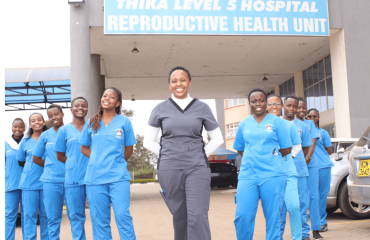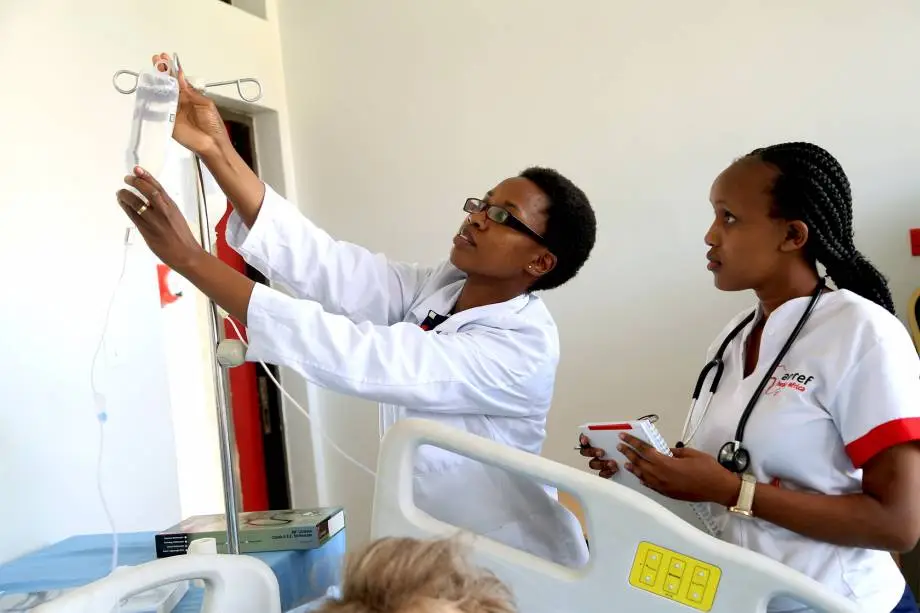
Five years ago, Esther Omagwa was one of only two nurses at the Railways Health Centre in Kisumu County, western Kenya. The immense workload often exhausted her, forcing her to turn away clients.
Today, the scene at the community health centre is remarkably different. With the nursing staff now expanded to a team of four, Omagwa and her colleagues are better equipped to deal with the load.
he health centre’s overall staff has tripled to 30 and this includes specialists for services such as maternal and child health, cardiology, orthopaedics and mental health. “Since we have been able to incorporate more specialized services in each department, we haven’t had to refer as many patients to larger facilities,” says Violet Ouma, a laboratory officer at the health centre.
Kisumu is one of Kenya’s six model counties for human resources for health, having successfully piloted the primary health care networks initiative in Kenya and reflects a broader transformation that is taking place in the country’s health service delivery. According to Kenya’s 2023 Health Labour Market Analysis, the country has doubled its health workforce in the last 10 years to almost 190 000 active health workers across 13 major health occupations, including nurses, midwives, doctors, surgeons and other specialists. Currently, the country produces approximately 8200 health care workers annually and by 2031, the number of health workers is projected to climb to over 270 000.
Efforts to increase digitalization at facility level is producing timely and accurate data collection, which helps health authorities identify staffing needs and gaps, facilitate targeted training programmes and distribute medical professionals equitably across the country.